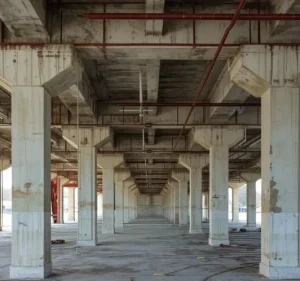
Buildings in Delhi NCR and North India go through aging, weather impact, heavy use, and structural changes over time. Because of this, internal cracks, weak concrete, and reinforcement corrosion can develop without visible signs. If these issues are not checked on time, they may affect building safety. That is why professional NDT services in Delhi NCR are important for early identification of structural problems.
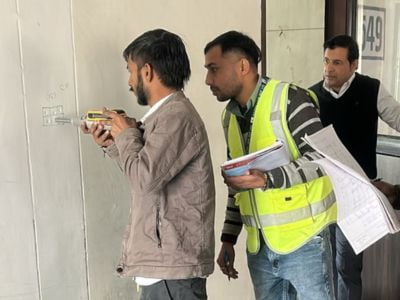
We provide non-destructive testing and structural audit services using reliable and proven methods. Our engineers carry out structural stability assessment and concrete strength testing through ultrasonic pulse velocity, rebound hammer, and half-cell potential tests as per standard guidelines.
This helps property owners understand the real condition of their structure without any damage. It supports timely repairs, improves safety, reduces future costs, and increases the overall life of buildings across Delhi NCR and North India.
Our Structural Audit Services in Delhi NCR
At MAC Infra Engineering , we provide end-to-end structural audit and NDT testing services in Delhi NCR to assess building safety, identify hidden defects, and recommend reliable strengthening solutions. Our services are carried out by experienced structural engineers following IS & ASTM standards.
Visual Condition Assessment
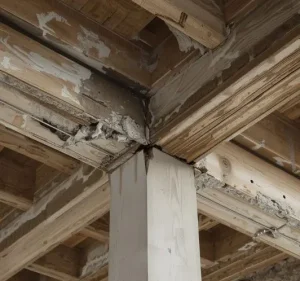
The structural audit begins with a detailed visual inspection of all structural elements such as columns, beams, slabs, staircases, and foundations. Visible cracks, deflection, leakage, and early signs of corrosion are identified to detect potential safety risks at an early stage.
Structural Stability & Load Evaluation
The building’s overall structural stability is evaluated by analyzing existing loads and current usage conditions. Any additional floors, heavy machinery, or change in occupancy are assessed to understand their impact on the structure’s load-carrying capacity.
Identification of Structural Distress Causes
A structural audit not only identifies damage but also determines the root causes of structural distress. These may include aging, construction defects, environmental exposure, material deterioration, or design-related issues, which are critical for planning effective repairs.
Safety Status & Engineering Recommendations
Based on the audit findings, the building’s safety condition is clearly defined—whether it is structurally safe, requires repairs, or needs strengthening. Practical engineering recommendations are provided for repairs, retrofitting, and further investigation if required.
Our NDT Testing Methods
Rebound Hammer Test
Quickly evaluates concrete surface hardness and uniformity to estimate in-situ strength during structural audit assessments.
Ultrasonic Pulse Velocity Test
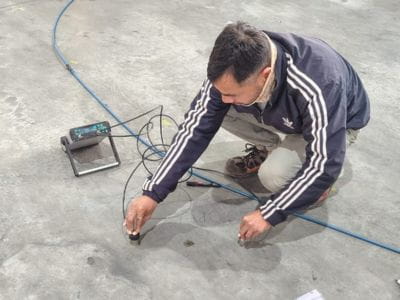
Assesses internal concrete quality by detecting cracks, voids, and honeycombing using ultrasonic pulse transmission.
Core Cutting Test
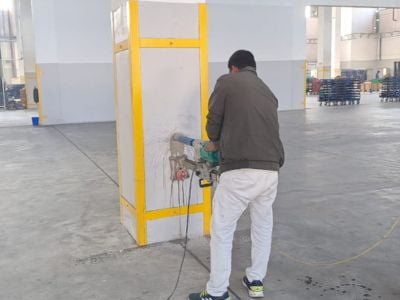
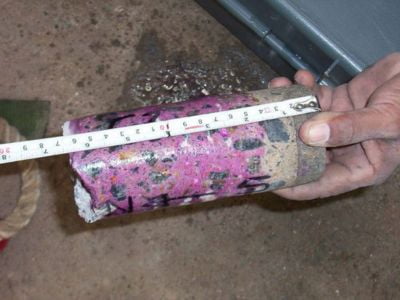
Determines overall concrete condition and load-bearing capacity to ensure long-term structural stability and safety compliance.
Carbonation Test
Checks carbonation depth in concrete to assess reinforcement corrosion risk caused by reduced alkalinity over time.
Chloride & Sulphate Test
Analyzes harmful chemical content in concrete responsible for corrosion, expansion, and durability loss in structures.